SHENZHEN, GUANGDONG, CHINA, October 29, 2026 /EINPresswire.com/ — In the design of next-generation high-performance vehicles and aircraft, every gram saved is not merely a technical metric-it directly translates into improved fuel economy, extended operational range, and superior handling dynamics. Traditionally, engineers were tethered to the physical limitations of steel and aluminum alloys to achieve structural integrity. However, the rise of advanced composite materials has fundamentally altered these design constraints. Carbon fiber, revered for its remarkable strength-to-weight ratio, exceptional fatigue resistance, and thermal stability, has evolved from a niche, high-cost option to a fundamental building block of modern engineering. As a leading High Quality Composite Materials Manufacturer from China, our objective is to act as a catalyst for this evolution, bridging the gap between sophisticated material science and practical industrial application to ensure that these high-performance resources are accessible to innovators across the globe.
I. The Scientific Evolution of Composite Materials
Composite materials are engineered structures composed of two or more constituent materials with significantly distinct physical or chemical properties. When synthesized, these components produce a material system with characteristics far superior to the sum of its individual parts. In the contemporary manufacturing landscape, carbon fiber composites represent the pinnacle of this field. These materials are characterized by extreme stiffness, ultra-high tensile strength, and a significantly lower density than metallic alternatives. Unlike isotropic materials such as metals, which exhibit consistent physical properties regardless of the direction of force, composites are anisotropic. This unique nature allows engineers to precisely tailor the material’s structural behavior by strategically adjusting the fiber orientation and layering sequences. This level of control is precisely why composites are the preferred choice in the aerospace and automotive sectors, where specific components are subject to complex, multi-axial mechanical loads that demand both rigidity and weight optimization.
II. Material Classification and Performance Metrics
To address the diverse and often conflicting demands of modern engineering, we categorize our material offerings based on their specific structural functions. The foundation of our production relies on utilizing premium-grade precursors, specifically versatile T300, high-strength T700, and ultra-high modulus T800 carbon fiber, which are recognized globally for their consistency and mechanical performance.
Carbon Fiber Yarn (Tow): These represent the essential reinforcement element. The grade of the fiber, such as T700 or T800, determines the ultimate tensile strength and elastic modulus of the final product. T800 fibers are particularly critical in high-stress aerospace and industrial applications where the minimization of mass is non-negotiable.
Carbon Fiber Fabrics: Engineered through intricate weaving processes, these fabrics provide omnidirectional strength. Common weave patterns-including classic 3K twill and plain weaves-offer varying degrees of structural stability, drape, and aesthetic finish. This diversity ensures that we can support everything from high-strength structural components to surface-finish-critical automotive body panels.
Carbon Fiber Prepregs: By pre-impregnating reinforcement fibers with a carefully calibrated resin matrix, we provide a ready-to-use solution that guarantees consistent fiber-to-resin ratios. JJY structures these core offerings into 3K Finish Sheets (3K + UD + 3K symmetrical layups combining 3K woven fiber with unidirectional layers for optimized bending rigidity and impact tolerance) and 100% unidirectional (UD) layups for tailored strength. This level of uniformity is vital for maintaining dimensional accuracy, structural repeatability, and long-term reliability in large-scale manufacturing environments, where variability can lead to catastrophic failure.
III. Precision Manufacturing and Technological Innovation
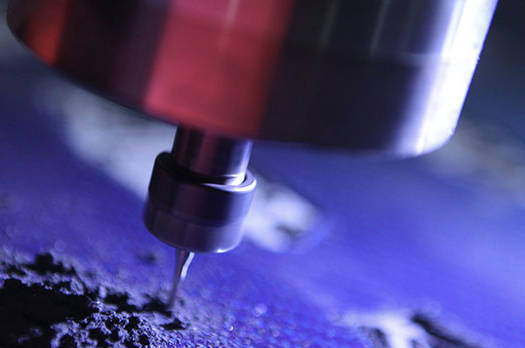
The performance of a composite part is not determined solely by the raw fiber but is defined by the technical precision of the manufacturing process. As a JJY facility, we integrate cutting-edge production methodologies, including advanced CNC carbon fiber cutting, precision vacuum bagging, and high-pressure molding. Our infrastructure is anchored by state-of-the-art CNC machinery delivering micron-level accuracy for complex geometries across scalable sheet dimensions ranging from compact 400x500mm panels up to massive 3000x6000mm industrial plates, with thickness profiles spanning from ultra-light 0.2mm foils to heavy-duty 50mm structural plates, enabling our engineering team to translate complex CAD designs into high-fidelity components with micron-level tolerances.
This precision is paramount in sectors like FPV drone racing and industrial robotics, where structural rigidity and frame weight are the primary determinants of operational performance. By leveraging computer-aided design (CAD) and finite element analysis (FEA) alongside precise fiber-layering techniques, we ensure that every component we manufacture can withstand extreme mechanical stressors, such as high-frequency vibration and impact loading, while maintaining its integrity over long, demanding operational lifecycles. Our commitment to technological innovation extends to our resin curing processes, which are optimized to ensure a high glass transition temperature and excellent chemical resistance.
IV. Diverse Applications and Structural Engineering
Our composite solutions have an extremely wide scope of application, and as various industries continue to deepen their exploration of extreme lightweighting and structural efficiency, application scenarios are growing exponentially.
In the modern automotive industry, carbon fiber has gradually penetrated from early racing patents into the core structures of passenger vehicles and high-performance sports cars. Our materials are widely used in chassis reinforcement architectures, where they utilize high specific modulus to enhance torsional rigidity, significantly optimizing vehicle handling response and cornering limits. Beyond structural components, we provide customized solutions for simulation racing equipment, aerodynamic kits, and interior aesthetic panels in high-performance aftermarket sectors. These components must withstand high-frequency mechanical vibration and dynamic airflow pressure, and have stringent requirements for surface finish. Through precise ply orientation design, we ensure that every part minimizes unsprung weight while offering fatigue life superior to traditional metals, providing drivers with faster lap times and more intuitive driving feedback.
In the aerospace and unmanned aerial vehicle (UAV) sectors, our carbon fiber materials are a vital lifeline for ensuring flight safety and performance. For aerospace applications, our composite sheets maintain excellent dimensional stability under extreme temperature differences and pressure changes. For FPV racing drones and industrial agricultural drones, our custom frame components-such as precision-engineered FPV drone frames ranging from 3-inch, 5-inch, 5.7-inch, 7-inch, 8-inch, 10-inch, 13-inch, 15-inch, 17-inch, 18-inch, 20-inch, to 24-inch configurations (including the Mark4, XL10, FX, and X Series)-serve as the “skeleton” of complex machinery. These components must withstand continuous, high-frequency stress cycles during flight, which poses severe challenges to material toughness and fracture resilience. By precisely controlling fiber orientation, we ensure that the frame maintains extreme anti-vibration performance while remaining lightweight, effectively absorbing motor vibrations and ensuring the precision operation of onboard sensors and control systems. This breakthrough in structural engineering directly empowers UAVs with longer flight endurance and stronger impact resistance.
V. Strategic Advantages and Global Service Commitments
The core competency of our organization lies in the seamless synthesis of professional technical support, efficient production capacity, and a deeply customer-centric service model. We are structured to support the full lifecycle of a project, from rapid prototyping and small-batch sample production to full-scale OEM and ODM manufacturing. By working intimately with global distributors, industrial manufacturers, and engineering teams, we function as a strategic collaborative partner rather than a mere transactional supplier.
Our stringent quality control protocols-ranging from the rigorous inspection of raw materials like T700/T800 fibers to the precision-testing of final components-ensure that every piece leaving our facility meets the most demanding industrial standards. We are committed to expanding our international footprint by providing innovative, sustainable, and high-performance carbon fiber solutions that empower our clients to push the boundaries of their respective fields. Through constant product development and technical refinement, we help our partners improve efficiency, durability, and product longevity in an increasingly competitive global market.
For more information regarding our technical capabilities and material solutions, please visit our website: https://www.jinjiuyi.net/
JJY
JJY
Legal Disclaimer:
EIN Presswire provides this news content “as is” without warranty of any kind. We do not accept any responsibility or liability
for the accuracy, content, images, videos, licenses, completeness, legality, or reliability of the information contained in this
article. If you have any complaints or copyright issues related to this article, kindly contact the author above.

Media gallery