
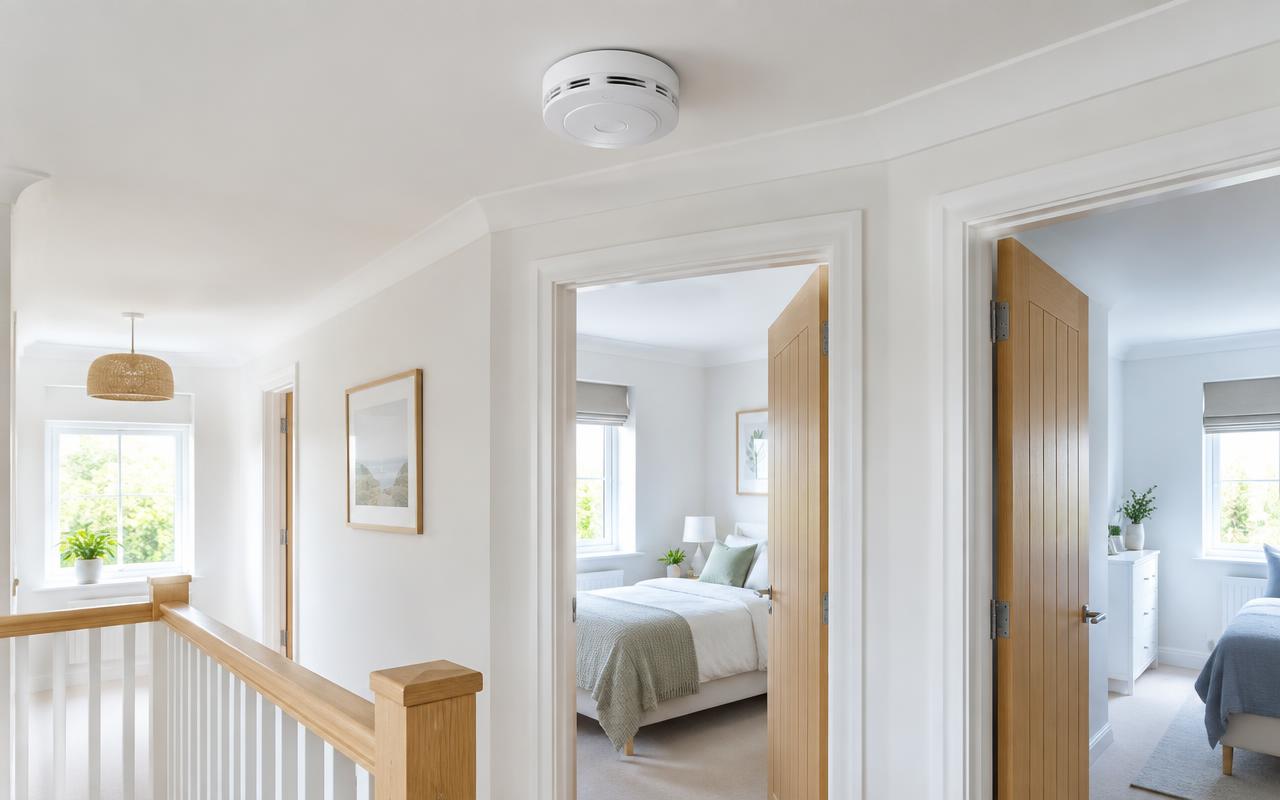
X-SENSE Behind the Scene factors for homeowners to consider when evaluating smoke alarm protection-power source, placement, interconnections, and more.
It can seem like a no-brainer to buy a smoke alarm until you start looking for a comparison. Several models operate on their own, others will communicate with alarms in other parts of the house, and newer systems offer canned features to those who want more than simple alarms.
Your selection isn’t always one with the most features. It is the one that suits the dimensions of the property, its paneling, the people residing there, and the method by which the alarm system will be taken care of in the long term.
If you are interested in checking your present fire safety plan, there are some ideas that will help you out before you select a new alarm.
Start With the Layout of the Home
Different coverage is required in a one/few-story vs. a multi-story home. It’s good to take a broad approach and see the house as a whole before comparing alarms.
Think about the number of floors, sleeping areas, hallway areas, spaces with little to no acoustics, basements, etc., where an alarm might not be noticed from across the house. The number of alarms required may also differ in the building or local fire codes, so it is best to check the local codes before deciding on the number of alarms required for installation.
It’s important as much as it’s important for the number of devices. Smoke alarms should be installed following the manufacturer’s instructions and kept away from conditions in the home that would normally and unnecessarily lead to smoke alarms being set off, such as cooking or excessive steam or strong airflow.
Decide Between Standalone and Interconnected Protection
Individual alarms are “standalone” circuits. Each unit, if it detects smoke, will sound an alert to notify. In some cases, such as small spaces or some replacement, this simple installation could suffice.
Interconnected alarms operate in other fashion. Companion devices allow alarms to interact with one another to trigger a response from all alarms throughout a building when there is a potential fire.
This may be very handy in a big home or a house with two floors. A system that is connected will give an indication throughout the property if smoke is perceived downstairs when someone is sleeping upstairs versus waiting for the alarm located near it.
People comparing a smoke detector can now choose among standalone, wireless interconnected, Wi-Fi-enabled, and base-station-connected models. The most appropriate option depends on the level of connectivity the household actually needs.
Consider the Power Source
Another factor to consider is power requirements.
There are batteries that are replaceable, and there are batteries constructed around long-life sealed batteries. Hardwired models can be connected in the home’s wiring and have battery backup to further protect during a power outage.
Sealed batteries could cut down on routine battery replacements but can’t prevent the need for alarm testing or even eventual replacement of the device. Each alarm comes with a recommended service life, and homeowners need to adhere to the manufacturer’s guidelines for testing, maintenance, and replacement.
Even if replacing an existing fire alarm, it’s a good practice to check the manufacturing date. The alarm may appear completely normal on the outside and be close to the end of its life.
Look at Interconnection Without Assuming You Need Wi-Fi
Wireless interconnection is different from Wi-Fi.
You can use the radio-frequency technology to let an alarm talk directly with compatible alarms, without using the home’s Internet connection. Depending on the system, Wi-Fi models can also include other features like remote monitoring or mobile alerts etc.
If ensuring an alarm is heard around the house is most important for families, wireless interconnection systems might be more applicable.
X-SENSE SD19-W wireless interconnected smoke alarm combines wireless interconnection with a 10-year sealed battery and is designed to work as part of a compatible interconnected alarm network. It also uses photoelectric smoke-sensing technology.
The value of such a system is not simply in adding technology. Its purpose is to extend the warning across the home when smoke is detected in one location.
Pay Attention to Testing and Everyday Maintenance
Don’t think smoke alarms can be set and forgotten.
Regular testing can ensure that the alarm will continue to alert despite still being able to hear it. The signal low battery indicator, fault indicators, end-of-life warning, or unusual behavior should also be monitored.
Care must also be taken with the instructions for cleaning and maintenance. An alarm’s function may be compromised by dust, insects, paint, or obstruction or by its location.
If there is a repeated false alarm due to “normal cooking” or steam, just turning the alarm off will only lead to another problem. It’s better to track where it is and follow the manufacturer’s instructions instead of removing batteries or allowing it to sit idle.
Features Should Support the Safety Plan
An alarm that is connected, alarms on voice, remote controls, and long-life batteries can make alarms easier to manage, but features should enhance a home’s plan for fire safety—not replace it.
There is still a need for residents to understand what to do when an alarm is sounded. Clear exits and a family escape plan continue to be essential, especially with young children, older individuals, and those who may be in need of assistance in case of an emergency.
Selection of a smoke alarm is not really to choose a “best” product but to select the proper equipment for each property. Features such as ease of use, applicable safety standards, maintenance expectations, power source, interconnection requirements, and home size need to be evaluated, among other factors.
A careful assessment of these considerations can make it easier and more appropriate to install and operate a smoke-alarm system that will be more effective for how a home is actually used.
About X-SENSE Innovations
Founded in 2013, X-SENSE Innovations operates from its registered U.S. address at X-SENSE USA LLC, 1209 Orange St, Wilmington, DE 19801, and specializes in developing certified home fire and safety solutions for residential environments.
The company focuses on producing professional and user-friendly safety devices, including domestic fire alarms such as smoke, carbon monoxide, and heat alarms, as well as smart home safety systems covering fire protection, intrusion detection, and indoor environment monitoring.
More information is available at https://www.x-sense.com/.
Media Details
Contact Person Name: Farrukh
Company Name: X-SENSE
Email: service@x-sense.com
Website: https://www.x-sense.com/
Phone: +1 (833) 952-1880


