
HOH XIL, CHINA / ACCESS Newswire / August 4, 2026 / Located in a high-altitude region at an average elevation of 4,700 meters, the Serling Tso Nature Reserve sees large herds of Tibetan antelopes returning with their newborn calves between July and September each year-making it an ideal window for field observation and behavioral research. During this year’s Tibetan antelope migration season, DEEP Robotics’ intelligent robots served as scientific research aids, capturing natural footage of migration, nursing, and foraging around Cuo’e Lake, providing valuable visual data for wildlife research and ecological conservation in the region.
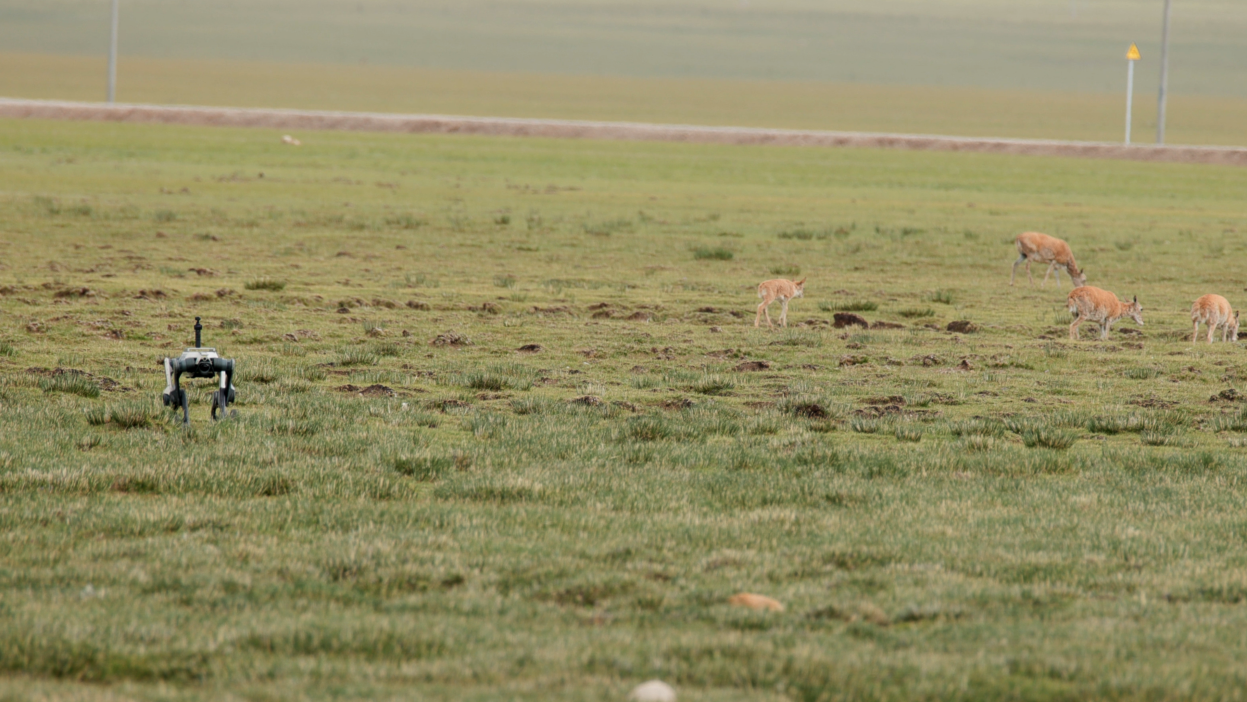
This is not the first time such robot dogs have been involved in high-altitude outdoor scientific observation. Last year, in the Hoh Xil region at an altitude of 4,800 meters, DEEP Robotics’ X30 quadruped robot used its biomimetic form to blend into the wild environment, minimizing disturbance to the animals. This time, in the Serling Tso Reserve, DEEP Robotics’ Lynx M20 wheeled-legged robot was primarily deployed for close-range visual documentation, offering technical support for rare wildlife conservation and long-term population studies.
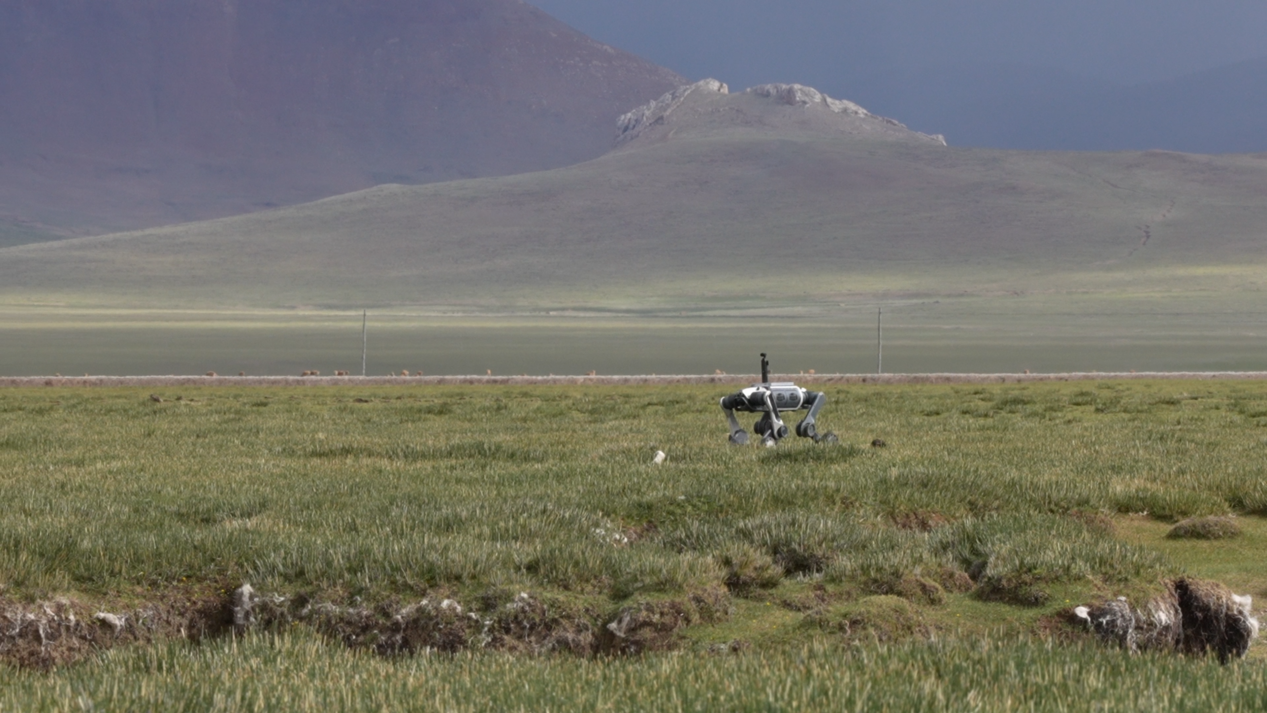
Robotic Technology Adapted to Complex Terrain and Climate
At dawn, ecological rangers at the Serling Tso Reserve observe the surrounding environment using monitoring equipment. Researchers from the Shaanxi Institute of Zoology collect Tibetan antelope fecal samples to accumulate data for population gene bank construction. Not far away, DEEP Robotics’ robots are also performing visual documentation tasks.
Conducting wildlife observation at high altitudes presents numerous natural challenges. The Serling Tso Reserve features complex terrain with soft meadows, undulating permafrost, and scattered gravel, making conventional mobile equipment prone to instability. Additionally, the region experiences low average annual temperatures, frequently accompanied by rain, snow, and other harsh weather conditions, creating a demanding field working environment.
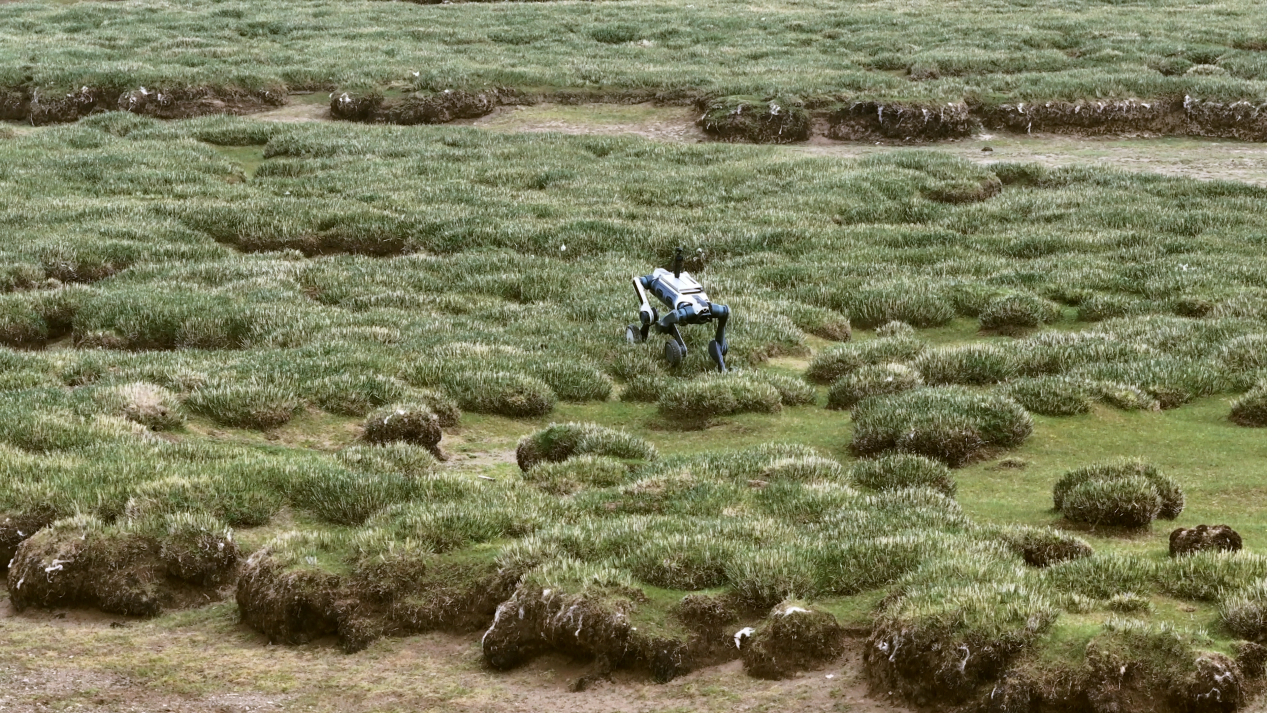
To address these environmental constraints, the all-terrain wheeled-legged robot Lynx M20 possesses strong environmental adaptability. Its whole-machine protection rating reaches IP66, enabling it to withstand the region’s unpredictable plateau climate and maintain operational status within a temperature range of -20°C to 55°C.
At the same time, this wheeled-legged robot combines the speed advantages of wheeled mobility with the obstacle-crossing capabilities of legged locomotion, enabling effective adaptation to complex terrain. Equipped with LiDAR and depth cameras, it can autonomously perceive terrain changes-meadows, permafrost, gravel slopes-and adjust its motion posture in real time, achieving smooth traversal within the reserve and providing more continuous technical support for high-altitude ecological monitoring.
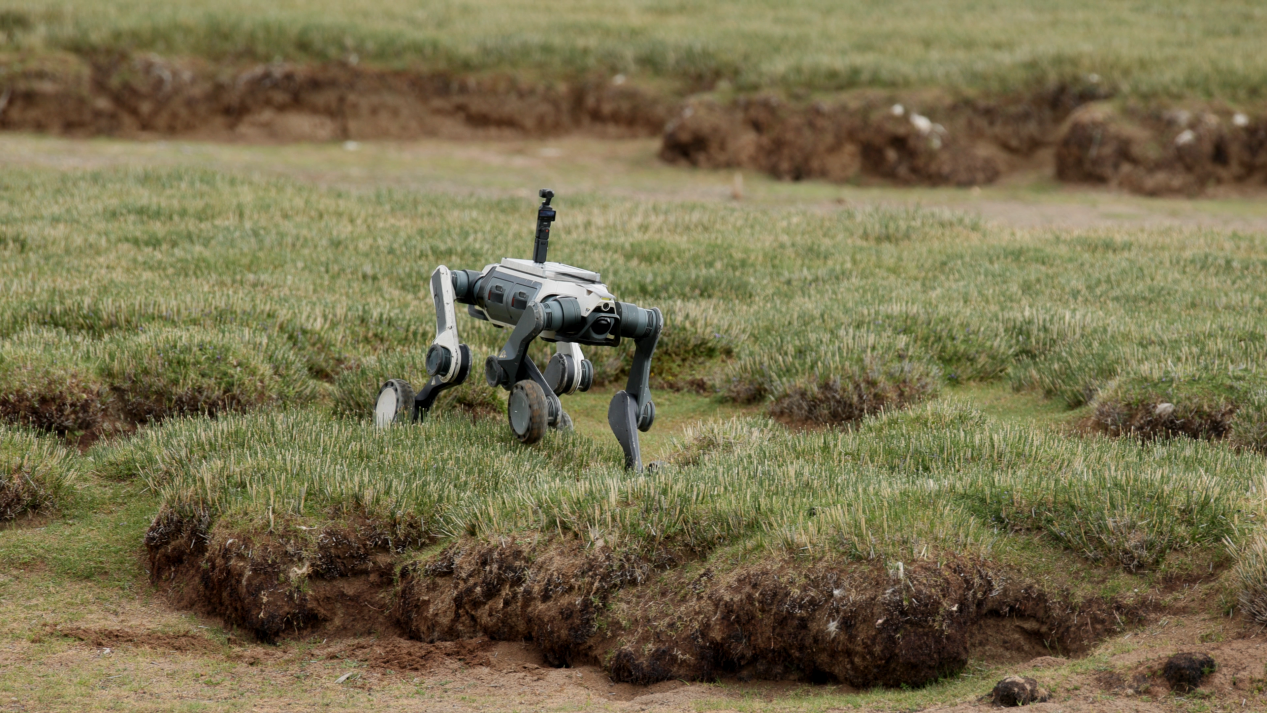
Low-Interference Operation: Blending into the Natural Environment
Tibetan antelopes are highly alert and extremely sensitive to sound and unusual movements, presenting challenges for close-range scientific filming. In the past, researchers primarily relied on fixed remote cameras for long-distance snapshots, or endured prolonged, concealed waiting in low-temperature, low-oxygen conditions to document the herds’ natural behavior.
By Cuo’e Lake, the Lynx M20 wheeled-legged robot, leveraging its low-noise motion characteristics, minimizes abrupt sound sources and movements during operation. This enables closer observation of wildlife activity in their natural state without causing significant disturbance.
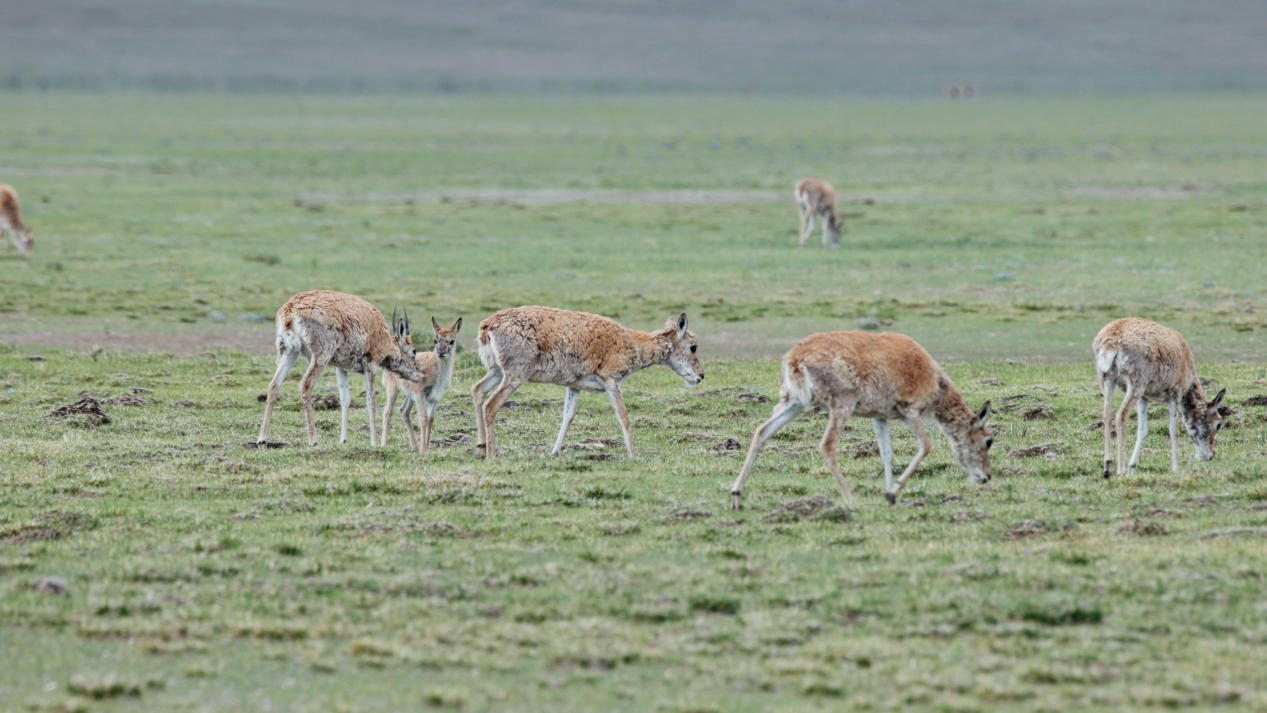
Traditional wildlife observation has often been constrained by terrain and climate, making it difficult to obtain continuous, multi-angle data. Now, through remote precise control, researchers can use robots to document antelope migration routes and nursing behaviors without startling the animals, capturing more behavioral footage and scientific data-providing a valuable supplement to ecological research.
At the observation site, as the robot dog slowly approached the antelope herd, a newborn calf was seen pacing with its mother by the lakeshore. After noticing the robot, the herd showed no signs of alarm, continuing to graze calmly.
“Its movements were gentle, and without human scent, it was more readily accepted by the animals,” commented a researcher on-site.
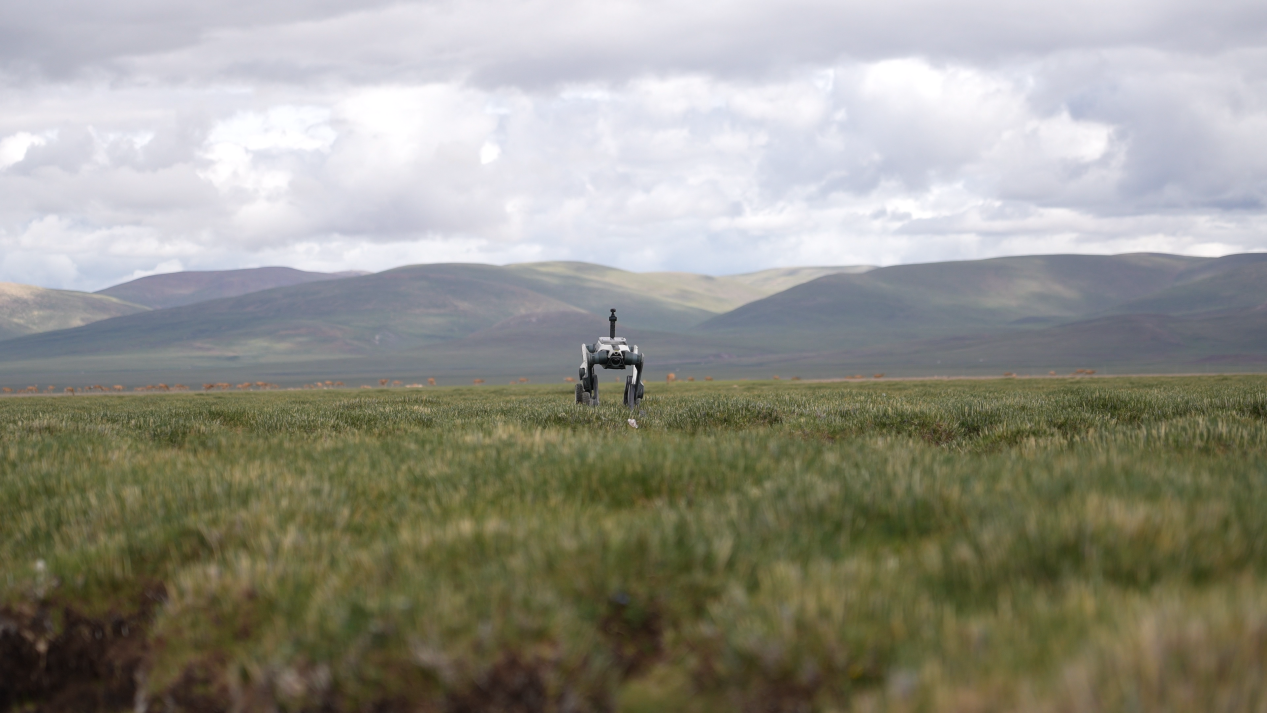
Technology Assists Ecological Research and Conservation
From last year’s technical feasibility exploration with the X30 in Hoh Xil, to this year’s routine mobile tracking with the Lynx M20 in Serling Tso, these practices have progressively validated the application potential of intelligent robots in extreme high-altitude environments. These cross-regional attempts have also accumulated valuable field experience for research teams.
In conducting wilderness exploration and scientific activities, minimizing disturbance to wildlife is a core principle of ecological conservation. The advancement of embodied AI technology provides researchers with a low-disturbance, high-efficiency aid-enabling safe data acquisition in harsh environments. Technology, serving as a bridge between humans and nature, is making meaningful contributions to ecological preservation and scientific research.
Company: DEEP Robotics
Contact: Vivian Chen
Email: chenlingjia@deeprobotics.cn
Website: https://www.deeprobotics.cn/en
SOURCE: DEEP Robotics
View the original press release on ACCESS Newswire


