
As AI enters the mainstream content-production workflow, the competitive question is shifting from who can generate content fastest to who can connect creators, digital IP, and regional markets into enduring value. Dr. Kervis Soo is seeking to answer that question through platform architecture.
KUALA LUMPUR, MY / ACCESS Newswire / July 28, 2026 / AI is making content production faster, but it is also pushing the creator economy into a more demanding phase of value creation. Tools can shorten the distance between an idea and a finished piece of content, yet they do not automatically create audiences, brand trust, or sustainable business models. What will ultimately determine how far a platform can go is whether it can turn a moment of attention into continuing content and connect individual creators to a broader path spanning production, distribution, brand collaboration, and digital IP development.
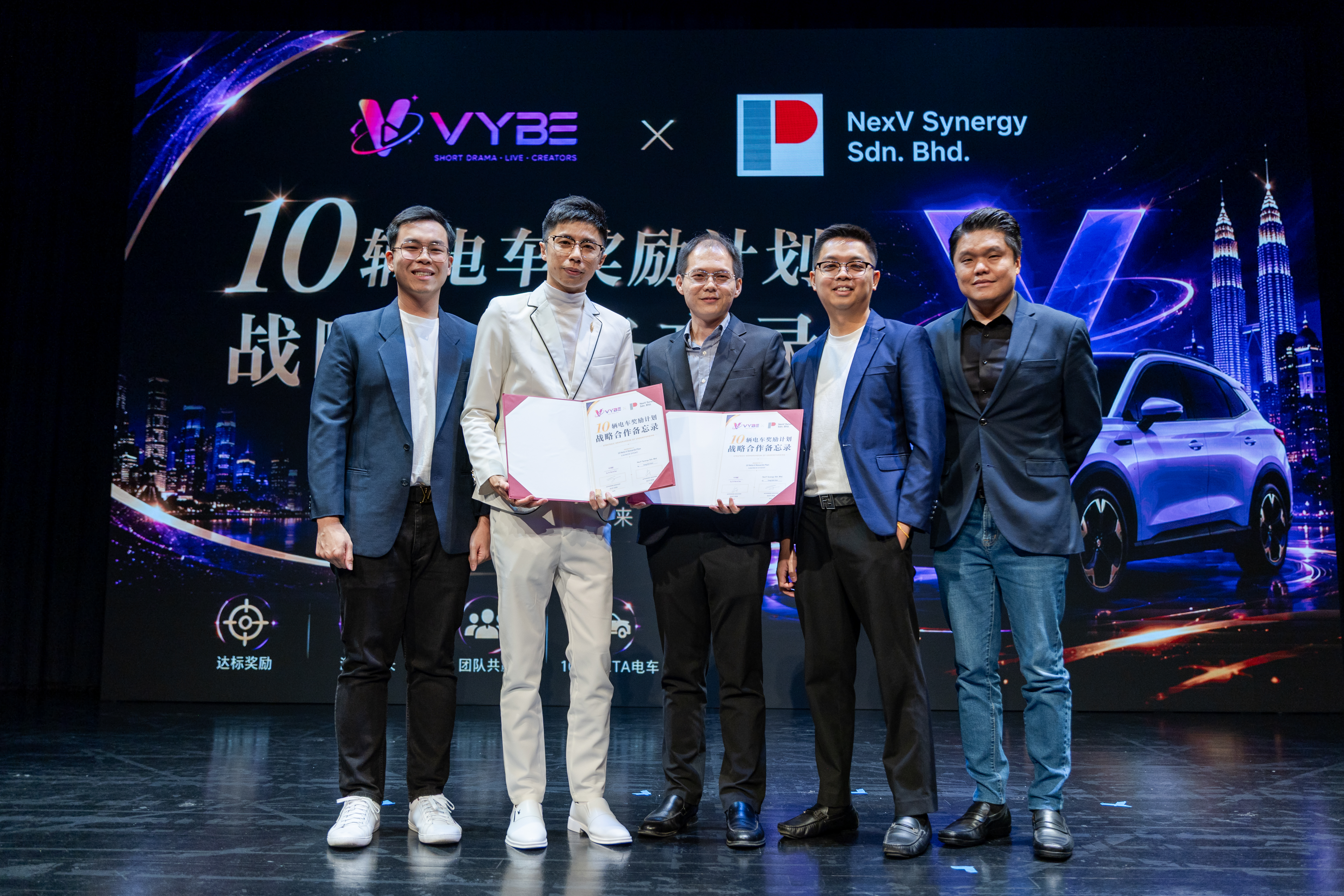
That is the industry proposition behind Xing Yu Group’s move to advance Vybe App (hereinafter, “Vybe”). In July, the platform presented launch activities in Taipei and Kuala Lumpur, bringing AI-assisted creation, short-form drama and digital IP, talent development, livestream networks, and cross-market content collaboration into a single framework. Rather than being viewed simply as an extension of an app’s features, Vybe is testing a way to organize a regional content industry.
The appeal of this approach rests on a clear judgment: Southeast Asia does not lack creativity, talent, or audiences. What remains scarce is a mechanism that allows technology, production, channels, and commercial resources to work together continuously. For a platform, attention is only the starting point. The longer-term dividing line is whether it can create stable supply, sustainable partnerships, and content assets that can be developed repeatedly.
AI lowers the barrier to creation. The scarce capability in the next phase is turning creative efficiency into content assets.
More Than an App: A Content Value Pathway
Vybe’s current ecosystem framework spans AI-assisted creation, entertainment interaction, short-form drama and digital IP, talent development, and cross-market collaboration. Its AI creation capabilities are designed for creators and content teams, exploring uses of AI in idea development, scriptwriting, storyboarding, and short-form production. On the audience side, the platform serves as a digital entry point connecting content, creators, influencers, and audience interaction.
Together, these directions point toward a more complete platform logic: the front end lowers the barrier to content production; the middle layer connects creators with production resources; and the back end seeks to bring promising works into distribution, brand collaboration, and IP development. If that pathway can operate continuously, content is no longer merely a product consumed once and quickly. It can become a digital asset that may be extended, licensed, and developed over time.
This also explains why short-form drama and digital IP sit at the center of Vybe’s proposition. Short-form content is naturally suited to mobile distribution, but it can also be constrained by brief lifecycles and limited creator bargaining power. To build enduring value, a platform must demonstrate that it can offer works room for further development beyond exposure-and enable creators to evolve from content publishers into personal-brand builders, project participants, and digital entrepreneurs.
From Competition Entry Points to a Stable Supply of Creators and Content
As entry points to the ecosystem, Vybe has announced four development initiatives for different creator communities: the AiSHOW National Talent Competition, the AI Short-Form Drama Creative Competition, the One-Person Company Startup Competition, and the Livestream Creator Network Initiative. Together, these initiatives correspond to talent discovery, AI content creation, individual entrepreneurship, and livestream-network development.
Viewed only by their form, such initiatives can easily be understood as competitions or promotional activities. Within the wider framework, however, they function more as front-end entry points for talent and content: creators may be discovered through activities, ideas can enter development and production, and projects with potential can then be connected to distribution, brands, or IP-collaboration resources.
This is also the first practical test Vybe must face. Activities can quickly concentrate attention, but they cannot substitute for a stable product experience, content quality, or creator retention. Competitions may open an entry point; what ultimately determines the quality of the ecosystem is whether participants stay and whether the platform can continue producing work with market relevance.
A launch event can create attention. An ecosystem must prove that it can produce value continuously.
Xing Yu Group’s Role: From a Collection of Resources to a Mechanism for Coordination
Within this framework, Xing Yu Group is not positioned as the operator of a single project. Its role is to advance strategic planning, resource coordination, and regional collaboration. The group is seeking to bring content, talent, digital platforms, and industry partners into a more durable mechanism of cooperation, supporting Vybe’s development in Malaysia and through regional collaborations.
Resources alone do not constitute platform capability. A single tool can improve efficiency in one part of a workflow, and a single project can generate short-term visibility. Only when multiple resources operate around a common method can content begin to cross the boundaries of markets, languages, and channels. For Vybe, whether the group can convert resources into repeatable mechanisms of collaboration may be more consequential than the scale of those resources itself.
The key issue ahead will not simply be how many creators or partners are added, but whether those relationships can produce stable content supply, clear rights arrangements, and sustained commercial coordination. This is the threshold a content platform must cross as it moves from a collection of projects toward an ecosystem.
The Strategist Behind Vybe: How Dr. Kervis Soo Is Defining the Platform
Vybe’s long-term direction is being advanced by Dr. Kervis Soo. Rather than defining the platform through a single product or activity, he is focused on ecosystem architecture: how AI creation, short-form drama IP, creator development, livestream networks, and cross-market collaboration can be brought into a unified method-so that each part can contribute content, talent, and market opportunities to the others.
This makes Dr. Kervis closer to a platform architect than a conventional project initiator. The objective is not simply to create the next creator who attracts attention, but to give creators a way to build work, brands, and long-term operating capacity beyond momentary visibility. In other words, the platform is not pursuing a single cycle of hype, but a growth pathway capable of producing new content, new talent, and new collaborations over time.
“We hope Vybe can become a platform where creators can grow continuously. AI is changing the way content is produced, but technology itself is not the destination. What matters more is how creators can gain more effective tools, clearer development pathways, and more opportunities to participate in content IP and cross-market collaboration. Through long-term resource integration and ecosystem building, Xing Yu Group hopes to help bring these opportunities into practice over time.”
This perspective provides the platform with a clear strategic narrative while also raising the bar for execution. Creators need to be able to develop continuously; content needs to be capable of repeat development; partners need to receive clear value; and regional coordination cannot remain at the level of one-off activities. Strategy can define direction, but only execution can determine whether the ecosystem takes hold.
The Next Phase: From Two Launch Activities to Platform-Capability Validation
The launch activities in Taiwan and Malaysia have established a regional starting point for Vybe at its current stage, but a launch event is not the same as market establishment. The next phase is expected to shift from awareness-building to capability validation: broadening creator participation, strengthening AI-driven content-production tools, advancing original content and digital IP development, and using Malaysia as a base from which to explore strategic collaboration opportunities across Southeast Asia.
At present, Vybe has not announced definitive arrangements for other countries or markets. That restraint makes the roadmap clearer: deepen product, content, and partner relationships on the foundation of confirmed market activities, then advance later collaboration based on actual results rather than using an unverified list of places to create an impression of expansion. With Southeast Asia as its starting point, Xing Yu Group will explore strategic collaboration opportunities across Asia over the long term; any such arrangements remain subject to the company’s future formal announcements.
The next phase will focus on broader creator participation, stronger AI-driven production tools, and the exploration of strategic collaboration across Southeast Asia.
Long-Term Value Will Ultimately Depend on What the Platform Can Deliver
From a market observer’s perspective, Vybe’s potential rests on several connected capabilities: the production efficiency offered by AI tools, the content supply created through creator networks, the asset-development potential of short-form drama and digital IP, and the regional coordination advanced by Xing Yu Group. If these capabilities can form a working loop, the platform may develop beyond a content entry point into infrastructure that connects talent, technology, and markets.
Industry data, however, describes market context rather than company performance. Vybe’s long-term value will not be determined by the scale of a single activity or by short-term exposure, but by whether product usage, creator participation, content quality, IP development, and commercial collaboration can continue to generate verifiable results. For Vybe, activities are only the entry point; platform capability is the destination.
At a time when AI is rapidly changing the content industry, this field does not lack competitors. Vybe’s differentiation remains to be established through execution: whether creators can be not only seen, but supported over the long term; whether content can be not only consumed, but continuously developed; and whether regional resources can be not only assembled, but converted into stable value. These will be the core bases on which the market assesses its next phase of development.
About Vybe
Vybe is a digital content platform for the creator economy. Its development direction includes AI-assisted creation, short-form drama and digital IP, talent development, livestream ecosystems, and cross-market content collaboration. The platform seeks to connect creators, content teams, brands, and industry partners, creating more opportunities for collaboration within the regional content ecosystem.
About Xing Yu Group
Xing Yu Group advances digital content, the creator economy, AI applications, and related industry collaborations. Through strategic planning, resource coordination, and regional partnerships, it supports the development of Vybe.
Contact Details:
SOURCE: Xing Yu Group
View the original press release on ACCESS Newswire


