
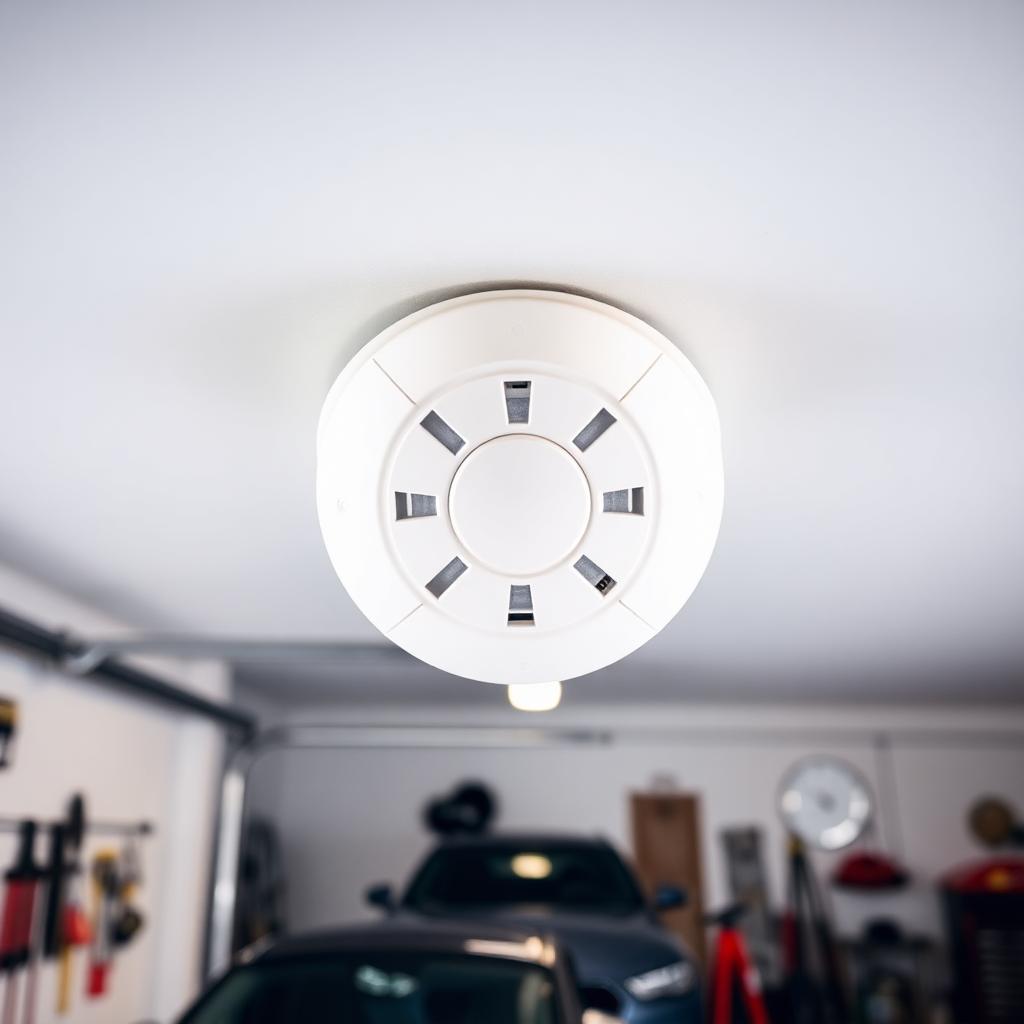
CHARLOTTE, NC – X-Sense highlights the growing need for whole-home protection as fire behavior in modern households becomes increasingly unpredictable.
Smoke alarms remain central to home fire safety, but they are not always the best fit for every room. Some areas of a property experience regular steam, dust, cooking fumes, exhaust, or sudden temperature changes. In these spaces, a heat detector may be the more suitable choice.
Heat detectors do not detect smoke. They respond when the temperature reaches a dangerous level or rises rapidly. This makes them useful in specific environments where a smoke alarm may create repeated nuisance alerts.
The key is understanding that heat detectors are not a replacement for smoke alarms throughout the home. They are an additional safety device for rooms where heat detection makes more sense.
What Makes Heat Detectors Different?
A smoke alarm is designed to detect smoke particles in the air. It can provide an early warning when a fire begins, which is why smoke alarms are important in bedrooms, hallways, and on every level of a home.
A heat detector works differently. It monitors the temperature of the surrounding area and activates when the heat rises beyond its set threshold. It does not react to smoke in the same way as a smoke alarm.
This can be helpful in environments where everyday activity may cause a smoke alarm to sound unnecessarily. Frequent nuisance alerts can become frustrating, and some people may be tempted to remove batteries or disable the device. That creates a much greater safety risk.
Using a heat detector in the right area can help reduce unwanted alarms while still providing an alert if temperatures become dangerously high.
Garages Are Often Better Suited to Heat Detection
Garages are one of the clearest examples. They can contain vehicles, batteries, chargers, fuel containers, tools, paints, stored cardboard, and electrical equipment. They also experience dust, exhaust fumes, insects, and wide temperature changes.
These conditions can make a smoke alarm less practical in some garage settings. A heat detector can provide an alternative by responding to dangerous heat rather than normal dust or fumes.
The same principle may apply to workshops. Woodworking, DIY projects, sanding, drilling, and other activities can create airborne particles that may affect smoke alarms. A heat detector may be more suitable where those conditions are common.
That does not mean every garage or workshop needs the same setup. Homeowners should consider the room’s layout, the materials stored there, local requirements, and the manufacturer’s installation guidance.
Kitchens Can Present a Different Challenge
Cooking is one of the most common sources of unwanted smoke-alarm activations. Steam, burnt food, and oil smoke can trigger an alarm when it is placed too close to a stove or oven.
A heat detector may be useful in a kitchen where smoke alarms are likely to activate repeatedly because of normal cooking activity. However, it should not be treated as the only fire warning device for the rest of the home.
Smoke alarms should still protect sleeping areas and other key parts of the property. A heat detector in a kitchen is best viewed as part of a wider fire-safety plan, not a single solution for the whole house.
Good ventilation, sensible alarm placement, and keeping smoke alarms a suitable distance from cooking appliances can also help reduce nuisance alerts.
Basements and Utility Areas May Need Extra Attention
Basements, laundry rooms, utility spaces, and storage areas can also benefit from a closer safety review. These rooms may contain boilers, water heaters, electrical panels, appliances, stored belongings, or workshop equipment.
A basement with fuel-burning equipment may require both smoke and carbon monoxide protection, depending on the setup and local safety rules. A heat detector may add further coverage where high-temperature detection is appropriate.
Homeowners should not assume that one alarm type works everywhere. Each room has different conditions and different risks. A well-planned system considers how the space is used instead of applying the same device to every area.
Connected Alerts Can Help the Whole Home Respond
One challenge with garages, basements, and utility rooms is distance. An alarm sounding in one of these spaces may not be heard clearly from an upstairs bedroom, particularly at night.
Interconnected alarms can help address this. When one compatible device detects danger, other connected alarms can sound throughout the property. This makes it more likely that everyone in the home hears the warning.
X-SENSE offers connected home safety devices that allow compatible smoke alarms, carbon monoxide alarms, and heat alarms to work as part of a wider system.
For larger homes, this can be especially useful. A heat detector in a garage may identify a dangerous rise in temperature, while connected alarms alert people in bedrooms, hallways, and living areas.
Interconnection does not replace regular testing or proper placement. It simply helps carry a warning beyond the room where the issue begins.
The Role of the X-SENSE XH02-M Heat Detector
The X-SENSE XH02-M heat detector is designed for rooms such as kitchens, garages, and basements.
According to X-Sense product information, the device uses a Class A1 NTC thermistor and responds within a heat sensitivity range of 129°F to 149°F, or 54°C to 65°C. It can connect to the SBS50 Base Station for app-based alerts and interconnected alarm functions.
The XH02-M has a sealed lithium battery. X-Sense lists a seven-year battery life when connected to the base station and up to 10 years when used without that connection. The product is also listed with an open-air wireless range of more than 1,700 feet, although actual performance can vary depending on walls, floors, and building materials.
The base station can support up to 50 compatible devices, allowing households to build a system around the needs of different rooms.
Choosing the Right Device for the Right Room
A heat detector may be the better choice where smoke, steam, dust, or fumes are a regular part of the environment. It can be particularly useful in garages, workshops, kitchens, basements, and utility spaces.
However, it should always complement, not replace, smoke alarms in sleeping areas and throughout the home. The strongest safety setup is one that uses the right type of device in the right place.
Homeowners should test all alarms regularly, keep them clean, replace them at the end of their stated service life, and make sure everyone in the household knows what to do when an alarm sounds.
About X-SENSE Innovations
Founded in 2013, X-SENSE Innovations operates from its registered U.S. address at X-SENSE USA LLC, 1209 Orange St, Wilmington, DE 19801, and specializes in developing certified home fire and safety solutions for both residential and commercial environments. The company focuses on producing professional and user-friendly safety devices, including domestic fire alarms such as smoke, carbon monoxide, and heat alarms, as well as smart home safety systems covering fire protection, intrusion detection, and indoor environment monitoring.
More information is available at www.x-sense.com.
Official company social media profiles: Facebook and Instagram.
Media Detail
Contact Person Name: Farrukh
Company Name: X-Sense
Email: service@x-sense.com
Website: https://www.x-sense.com/
Phone: +1 (833) 952-1880


