

Key Takeaways
- Migraine typically involves moderate to severe, often one-sided throbbing head pain, along with nausea and sensitivity to light and sound.
- The trigeminal nerve carries pain signals from the face, forehead, and scalp, while the vagus nerve communicates between the brain and organs like the heart, lungs, and gut.
- No established evidence shows that the vagus nerve causes migraine or explains why attacks happen.
- Stress is where the two systems overlap, since the vagus nerve plays a role in the body’s stress response and many people notice stress patterns around their attacks.
- Research on vagus nerve stimulation for migraine is still early, raising the question of what nervous-system changes actually mean for migraine outcomes.
Searching online for answers about migraine often leads to the vagus nerve, especially for anyone who has read that a misfiring nerve somewhere in the body might explain their attacks. Migraine pain travels along a different nerve pathway altogether, while the vagus nerve’s connection shows up mainly through its role in stress and the body’s broader regulatory systems. Understanding that distinction helps separate a genuine nervous-system link from a claim about what actually causes the pain, a topic covered in more depth by Nuropod‘s guide which focuses on nervous system support rather than migraine treatment itself.
Does the Vagus Nerve Cause Migraines?
No established evidence shows that the vagus nerve causes migraine or explains why some people experience recurrent attacks while others never do. Migraine has no single known cause. Genetics, hormonal shifts, sleep patterns, and individual triggers all play a part, and the mix looks different from person to person.
What does connect the vagus nerve to migraine is something broader: the nervous system’s response to stress. Many people notice their attacks cluster around stressful periods, or sometimes surface right after the pressure lifts. That pattern is real and worth paying attention to, but noticing a connection between stress and migraine is different from proving that the vagus nerve itself triggers the pain.
The Trigeminal Nerve’s Role in Pain
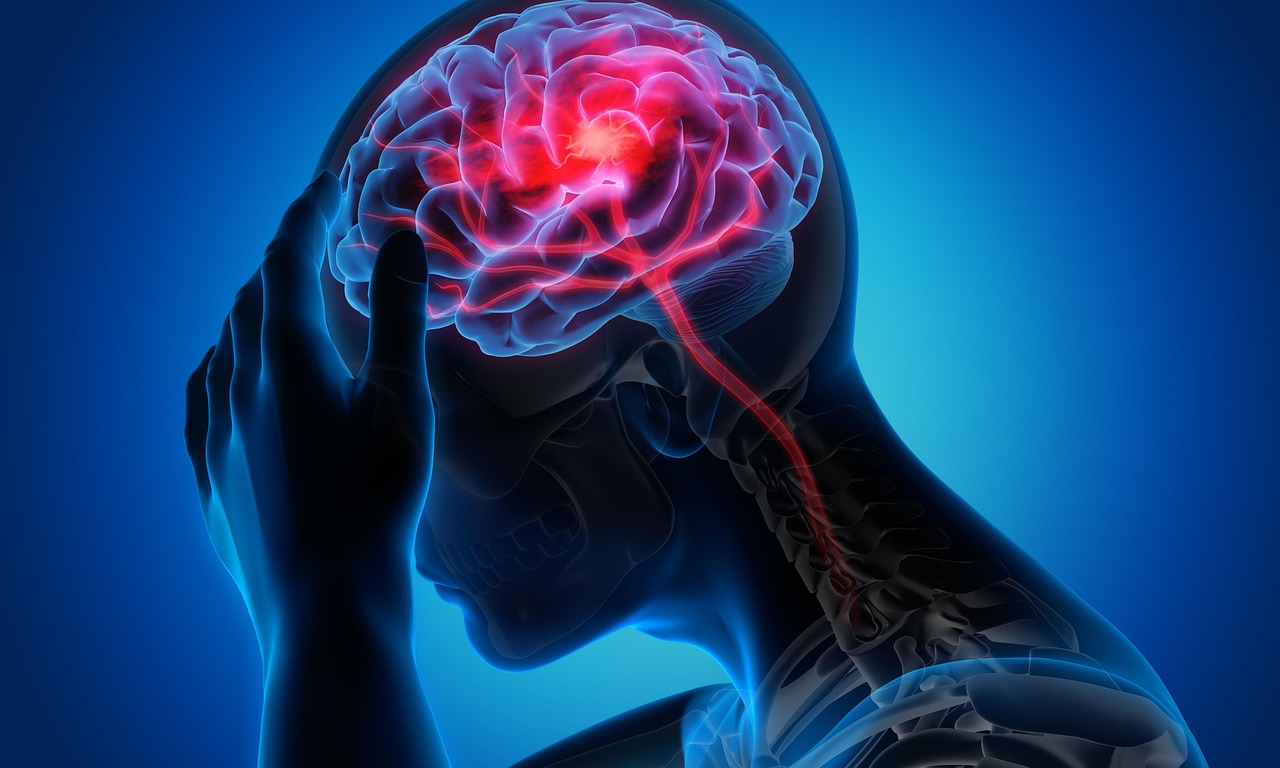
The nerve actually responsible for carrying migraine pain signals is the trigeminal nerve, not the vagus nerve. The trigeminal nerve carries sensation from the face, forehead, and scalp back to the brain, and during a migraine attack, it becomes overactive. That overactivity triggers the release of chemicals that irritate and inflame the tissue surrounding the brain, producing the throbbing pain most people associate with migraine.
How Migraine Symptoms Show Up
Migraine usually brings moderate to severe pain, often throbbing and frequently concentrated on one side of the head. The pattern can start building hours or even a day before the head pain itself arrives, with early warning signs like mood changes, food cravings, neck stiffness, or frequent yawning. Some people also experience aura, most commonly visual disturbances such as flickering lights, blind spots, or zigzag patterns, though aura does not occur in every attack or for every person.
Once the head pain sets in, it often travels with nausea and a sharpened sensitivity to light, sound, and sometimes smell. Fatigue and trouble concentrating can linger well into the following day, even after the head pain itself has eased.
Why Pain Travels a Different Path
The distinction between the trigeminal nerve and the vagus nerve matters because they serve fundamentally different jobs. The trigeminal nerve specializes in carrying sensory and pain information from the head and face. The vagus nerve, by contrast, runs a much longer route, extending from the brainstem down through the neck and chest into the abdomen, with branches reaching the heart, lungs, and gut along the way.
That difference in anatomy explains why migraine pain does not originate in the vagus nerve. Pain-sensitive nerve endings around the blood vessels and membranes surrounding the brain fall within the trigeminal nerve’s territory, not the vagus nerve’s. Recognizing this separation helps clarify why stimulating the vagus nerve, even if it changes nervous-system activity, does not automatically translate into relief from the pain pathway driving a migraine attack.
Where Stress and the Vagus Nerve Intersect
Stress stands out as the most meaningful overlap between the vagus nerve and migraine. The vagus nerve plays a central part in how the body manages stress, acting as a counterbalance to the fight-or-flight response. When that balance shifts, whether due to chronic stress or an acute stressful event, the body’s overall regulation can feel less steady, and for many people, that instability shows up alongside migraine patterns.
Researchers have examined whether shifts between the body’s fight-or-flight and rest-and-digest states line up with the timing of migraine attacks. The evidence points in more than one direction, and it remains unclear whether stress sets off an attack or simply follows one that has already started.
The Vagus Nerve’s Broader Body Role
Beyond stress, the vagus nerve influences a surprisingly wide range of bodily functions. It helps regulate heart rate and blood pressure, shapes breathing rhythm, supports digestion and the movement of food through the gut, and contributes to how the body manages inflammation throughout the system.
That breadth also makes it easy to assume the vagus nerve touches everything, including migraine pain itself. The vagus nerve shapes the environment the nervous system operates in; it does not appear to control the trigeminal pathway that produces migraine pain.
What Vagus Nerve Stimulation Research Actually Shows
Much of the research on vagus nerve stimulation looks at how the nervous system responds, measuring changes in nerve activity and in heart rate variability (HRV), the natural variation in time between heartbeats. These are useful markers of how the body moves between stress and recovery, but they are measures of the nervous system rather than of migraine itself.
Nervous System Changes vs. Migraine Outcomes
A shift in nerve activity or heart rate variability is a different finding from fewer or milder migraine attacks. Research on auricular vagus nerve stimulation specifically for migraine remains in its early stages, which means there is no established timeline, no settled protocol, and no confirmed outcome data connecting auricular stimulation directly to migraine relief.
In clinical studies, vagus nerve activity increased by an average of 61%. In clinical studies, heart rate variability increased by an average of 18%. These findings demonstrate measurable changes in nervous system activity, not proven reductions in migraine frequency, severity, or duration.
A Nervous-System Link, Not a Proven Cause
Migraine remains a condition shaped by many factors, with no single cause explaining why attacks happen or why they vary so much from person to person. The trigeminal nerve carries the pain itself, while the vagus nerve’s connection runs through its broader role in stress and whole-body regulation. These are related systems, but a connection through stress is different from proof that one causes the other.
Research into vagus nerve stimulation continues to expand, and measurable changes in nervous-system activity are genuinely documented. Translating those changes into confirmed migraine outcomes is a separate question that current research has not yet settled.
For a closer look at the research, readers can explore Nuropod’s guide to the vagus nerve and migraines, which explains the nervous system connection, current findings, and unanswered questions. Anyone considering vagus nerve stimulation alongside existing migraine care should consult a healthcare professional first.
Disclaimer: Research referenced in this article was conducted using Parasym’s neuromodulation technology under research conditions. Findings relate to specific study populations and should not be interpreted as guaranteed individual outcomes. Nuropod is classified by the FDA as a non-significant risk device and is not intended to diagnose, treat, cure, or prevent any disease.
Nuropod by Parasym
press@nuropod.com
2108 N Street
Sacramento
California
95816
United States