

Key Takeaways
- Choosing the oven before the outdoor kitchen is designed lets the manufacturer’s drawings set the base size, counter opening, clearances, chimney route, and gas line, instead of forcing the oven to fit a structure built first
- Built-in ovens arrive four ways: drop-in, ready to finish, base mounted, or bare dome, and each one hands a different share of the construction and finishing work to the homeowner or mason
- Weight is a design number, not a guess: a Portuguese brick dome can weigh as much as roughly 1,250 to 1,800 pounds, while an engineered core like the HPC Fire Di Napoli is built around a lighter base rated for 470 pounds
- A new oven needs to be fired or cured gradually before the surround closes in, a step that includes a five-day cure for brick domes and at least a five-hour first firing for cast refractory ovens
- Winter has become the window when lead times, base-building, and contractor schedules line up so a spring outdoor kitchen is ready for its first pizza rather than a midsummer one
A built-in pizza oven is not an appliance that shows up and gets plugged in. It is a small construction project baked into a bigger one, and the sequence matters as much as the materials. Getting the order right starts long before spring weather makes anyone want to pour concrete or stack stone.
Choose Your Oven Before You Build
The single biggest planning mistake in an outdoor kitchen project is designing the island first and shopping for the oven second. A pizza oven’s actual dimensions, weight, venting style, and clearance requirements come from its own manufacturer drawings, and those numbers are what should shape the base, the counter cutout, the chimney chase, and the utility rough-in. Building the structure first and hoping an oven fits into it later is how change orders happen mid-project.
This is why getting a model number and an installation manual into hand before a contractor ever picks up a trowel pays off. Once the oven is picked, its spec sheet becomes the blueprint for everything else: how wide the masonry runs, how tall the chimney climbs, where the gas shutoff sits. Crustify Pizza Ovens invites homeowners and contractors to send a drawing before ordering so the oven’s requirements can be checked against the plan rather than discovered after the fact.
A good rule of thumb: treat the oven choice as step one of the outdoor kitchen design, not a line item picked after the layout is final. That single decision ripples through every measurement that follows.
Four Ways a Built-In Oven Arrives
Not every built-in oven asks the same thing of a build. Some show up finished and ready to drop into place. Others arrive as a core that still needs a mason’s hands to look complete. Knowing which category an oven falls into before ordering avoids a lot of surprised phone calls on delivery day.
Drop-In: Finished and Ready to Set
A drop-in oven is finished on the outside and simply sets into a cutout in an existing or planned counter. There is no cladding to add, no chimney chase to frame, and often no chimney at all since some drop-in ovens vent through the front rather than through a roof or pergola. This route suits a kitchen where the counter already exists, or is being built to a known drawing, and the homeowner wants the oven looking complete the day it is installed.
Ready to Finish: A Core for Your Mason
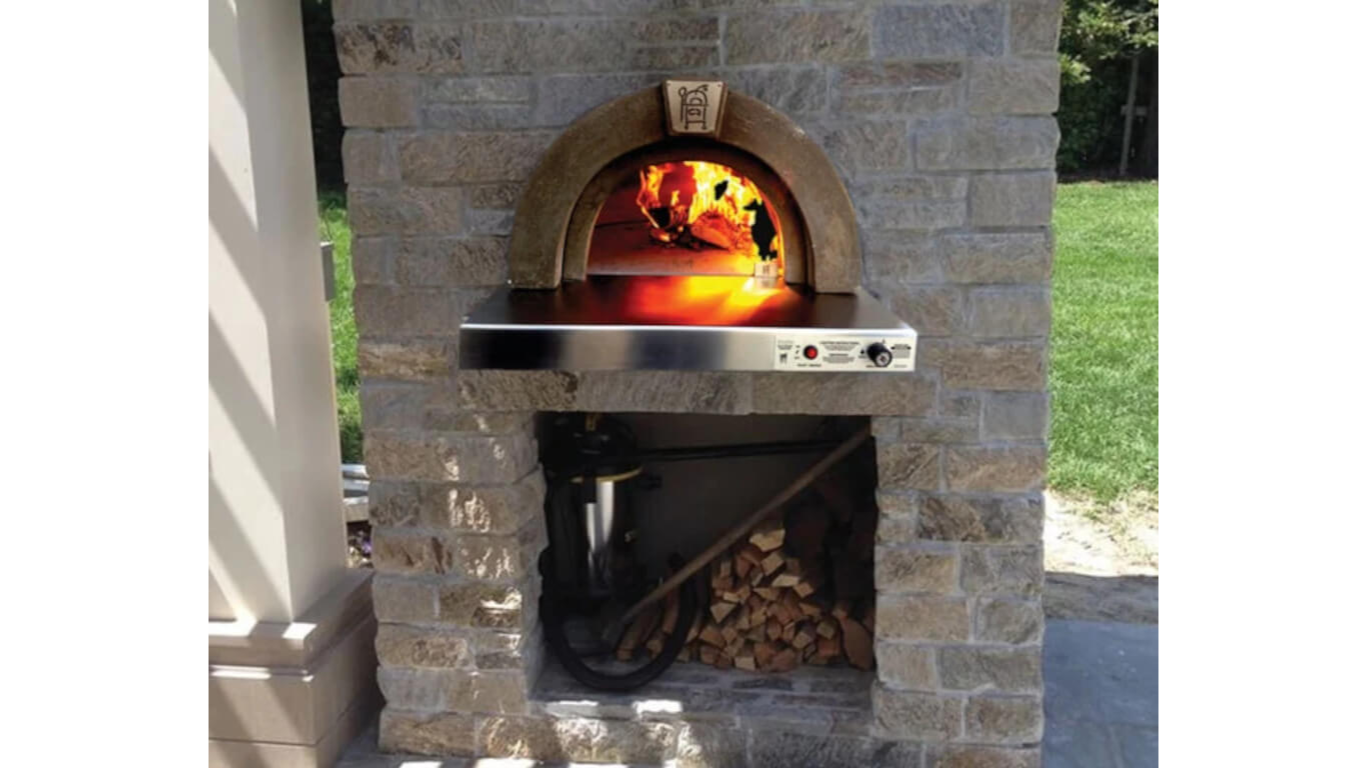
A ready to finish oven is the engineered core only, finished inside and bare outside, built for a mason to construct a base and surround around and then clad in stone, stucco, tile, or brick. The appeal here is that the finished result reads as a from-scratch masonry oven, but the heavy engineering, insulation, and heat management are already solved by the manufacturer. This path is chosen when the surround itself is the design centerpiece and a mason is already lined up for the job.
The HPC Fire Di Napoli is one example of this route: https://crustifypizzaovens.com/products/hpc-fire-di-napoli-series-hybrid-dual-fuel-wood-gas-burning-built-in-pizza-oven-ready-to-finish.
Base Mounted: A Finished Dome on Masonry
A base mounted oven arrives finished, in one piece, and sits on top of a masonry base rather than inside a framed structure. There is no counter cutout to build and no chase to construct, just a base rated for the oven’s weight and a plan for getting a very heavy, finished dome off the delivery truck and onto that base, often with an engine hoist. Handmade Portuguese brick domes typically ship this way, each arriving on its own concrete slab.
Bare Dome: Fully Clad by the Builder
A bare dome is the same firebrick chamber and insulation found in a finished brick oven, but with no decorative front and no cladding at all. It is set on a block base, cured, and only then faced in whatever material the rest of the kitchen uses. This is the lowest-cost way into a Portuguese brick oven, and it hands the entire finished look to the builder. One detail worth confirming before closing it in: a clad dome typically no longer accepts the manufacturer’s fitted cover, which can be a condition of the warranty, so that question is worth settling with the retailer before the stonework goes up.
What the Structure Must Provide
Regardless of which of the four arrival types gets chosen, the structure underneath has to deliver on three fronts: weight capacity, safe clearance from anything that burns, and a working path for smoke or exhaust to escape.
Weight and the Base
A built-in oven is not light. Portuguese brick domes can run from roughly 1,250 to 1,800 pounds depending on the finish, which is why the base beneath one is always masonry, concrete block, or an engineered steel frame, never a wood-framed counter. On the lighter end, an engineered core oven like the Di Napoli is designed around a base rated for about 470 pounds, carried by two block walls rather than a solid slab. The lesson in both cases is the same: the base gets sized to the specific oven’s documented weight, not to a generic assumption about how heavy pizza ovens tend to be.
Clearances from Combustibles
Every built-in oven needs open air above it and real distance from eaves, pergola rafters, siding, and any other combustible material nearby. These numbers come straight from the oven’s installation manual and from local fire code, and they do not get smaller because the oven is a permanent fixture rather than a portable one. A surround built from non-combustible material, and a roofline or overhang that respects the manufacturer’s stated clearance, are not optional finishing touches; they are part of what makes the structure sound to inspect and safe to use for years.
Chimney and Venting Routes
Venting style varies more than most first-time buyers expect. Some drop-in ovens vent through the front and need no chimney at all. A ready-to-finish core, by contrast, vents through the top of its enclosure and needs a proper chimney run planned as part of the surround, sized to the manufacturer’s required diameter and extended to clear the roofline by the margin the chimney maker and fire code specify. Brick domes typically vent through a short spout fitted with a damper, with an extension available for installations that need to clear a roof or pergola. Because this detail changes so much depending on the oven, the venting plan belongs on the drawing board before the surrounding structure gets framed, not worked out after the fact.
Choosing the Fuel and Planning the Gas Line Early
Fuel choice is one of those decisions that feels simple until it collides with a construction schedule. Wood-fired ovens deliver the highest heat and the flavor most people associate with a brick oven, but they ask the cook to build and tend a fire each time. Gas-fired ovens light at the turn of a knob and hold a steady temperature with no tending, which suits a weeknight dinner far better than stacking kindling. Hybrid, or dual fuel, ovens do both, often using a gas burner to light the wood and keep the fire steady once it’s going.
Whichever fuel gets chosen, the gas configuration typically needs to be confirmed at the time of ordering, since propane and natural gas models are often built and sold as separate configurations rather than switched after the fact. A plumbed natural gas line, where available, tends to be the lowest-cost fuel per cooking session because it runs off a utility rate rather than refilled tanks, but it requires a fixed hookup planned into the project. Gas work itself should always go to a licensed gas installer or plumber, and the line, the accessible shutoff valve, and the connection point all need to be roughed in before walls or surrounds close around them. Treating the gas line as an afterthought, something to figure out once the oven is already sitting on its base, is one of the more common and more expensive mistakes in outdoor kitchen builds.
Why Winter Is the Planning Window
An outdoor kitchen gets used heavily from spring through fall, but almost none of the work that makes it usable can happen on a rushed spring timeline. Winter, when the backyard sits unused anyway, turns out to be exactly the right season to compare ovens, request manufacturer drawings, confirm fuel type, and place an order.
Lead Times That Shape the Schedule
Lead times vary a great deal depending on the oven and whether it’s in stock. Some engineered ovens that are already in a warehouse can ship within a day or two and arrive within less than a week, while a built-to-order version of the same oven can take about four weeks. Certain brick oven configurations built to order at the factory can run closer to twelve weeks. An oven ordered in winter, even one with a longer build time, is typically on hand well before a spring project needs it set on its base. An oven ordered after the ground has already thawed runs the real risk of arriving after the contractor has already finished the masonry and moved on to the next job.
Sequencing the Project Step by Step
A well-run built-in oven project tends to follow a consistent order:
- The oven gets chosen, and its manufacturer drawings get requested and reviewed.
- The base, opening, clearances, chimney route, and utility lines get designed around those drawings.
- The fuel type gets confirmed and the oven gets ordered.
- The base gets built, with the gas line and any electrical outlet roughed in before the base is finished.
- The oven arrives by freight and gets moved from the curb to the base.
- The oven gets set, connected, and test-fired or cured before anything closes in around it.
- The surround gets framed, sheathed, and clad, with the chimney completed and capped last.
Masons and outdoor kitchen contractors tend to book up fast once the weather turns warm, so a homeowner who has already chosen the oven, gathered the drawings, and designed the base over the winter is in a far better position to get on a contractor’s spring calendar than one still comparing options in April.
Delivery Day: Curb to Base
A crated built-in oven is heavy freight, not a package left on the porch. Delivery trucks drop these crates at the curb using a liftgate, which means the job of moving the oven from the curb to its final spot on the base falls to the homeowner or the installer. For a finished brick dome weighing well over a thousand pounds, that often means an engine hoist and the oven’s built-in lifting loops; for a lighter engineered core, the maker recommends a forklift to set it on the base. Either way, the street needs to accommodate the delivery truck, and a path from curb to base needs to be mapped out before the crate ever arrives, since figuring it out on the spot with a thousand-pound oven sitting on a pallet is not a good plan.
Free Freight and Liftgate Delivery From Crustify
Every residential oven from Crustify Pizza Ovens ships free with liftgate delivery included, and orders over $750 ship free as well, across the 48 contiguous states and Washington, DC. That covers the freight and the liftgate lowering the crate to the ground; moving the oven the rest of the way to its base is still part of the homeowner’s or contractor’s delivery-day plan. A crated oven should also not sit outside on a pallet for weeks waiting on a mason’s schedule, so timing the delivery to land close to when the base will actually be ready is worth coordinating in advance.
Curing and Test-Firing Before Closing In
A new oven needs to be brought up to temperature gradually, and this step has to happen before the surround gets built around it, not after. A refractory dome holds moisture from the casting process, and the first fires drive that moisture out as vapor; heating it too fast is a common way cracks start. For an engineered core oven, that typically means a first firing of at least five hours on a rising schedule, done with no door in place, so an installer can still check the gas connection and ignition while everything remains accessible. A traditional brick dome generally needs a five-day cure before it gets clad or fitted with a gas burner.
This step matters because once the surround is framed, sheathed, and finished in stone or stucco, the oven underneath is far harder to inspect or adjust. Doing the first firing or cure while the oven is still exposed means any issue with the gas line, the ignition, or the hearth gets caught while it’s still simple to fix, rather than after the mason has already closed everything in.
Winter Planning Reaches a Spring Oven
The pattern across every step of this process is the same: decisions made in winter, while the backyard sits quiet, prevent delays once spring construction season starts and everyone else is scrambling for a contractor’s time slot. Choosing the oven first, matching the base and venting to its actual specifications, confirming the fuel and gas line early, and building in time for curing or test-firing all turn a project that could stretch into midsummer into one that reaches its first pizza closer to the start of the season.
For anyone ready to put a plan on paper this winter, the built-in collection at Crustify Pizza Ovens covers drop-in, ready to finish, base mounted and bare dome ovens: https://crustifypizzaovens.com/collections/built-in
Crustify Pizza Ovens
+1-877-281-6836
255 Rivertown Shops Dr 102 #141
Saint Johns
FL
32259
United States